
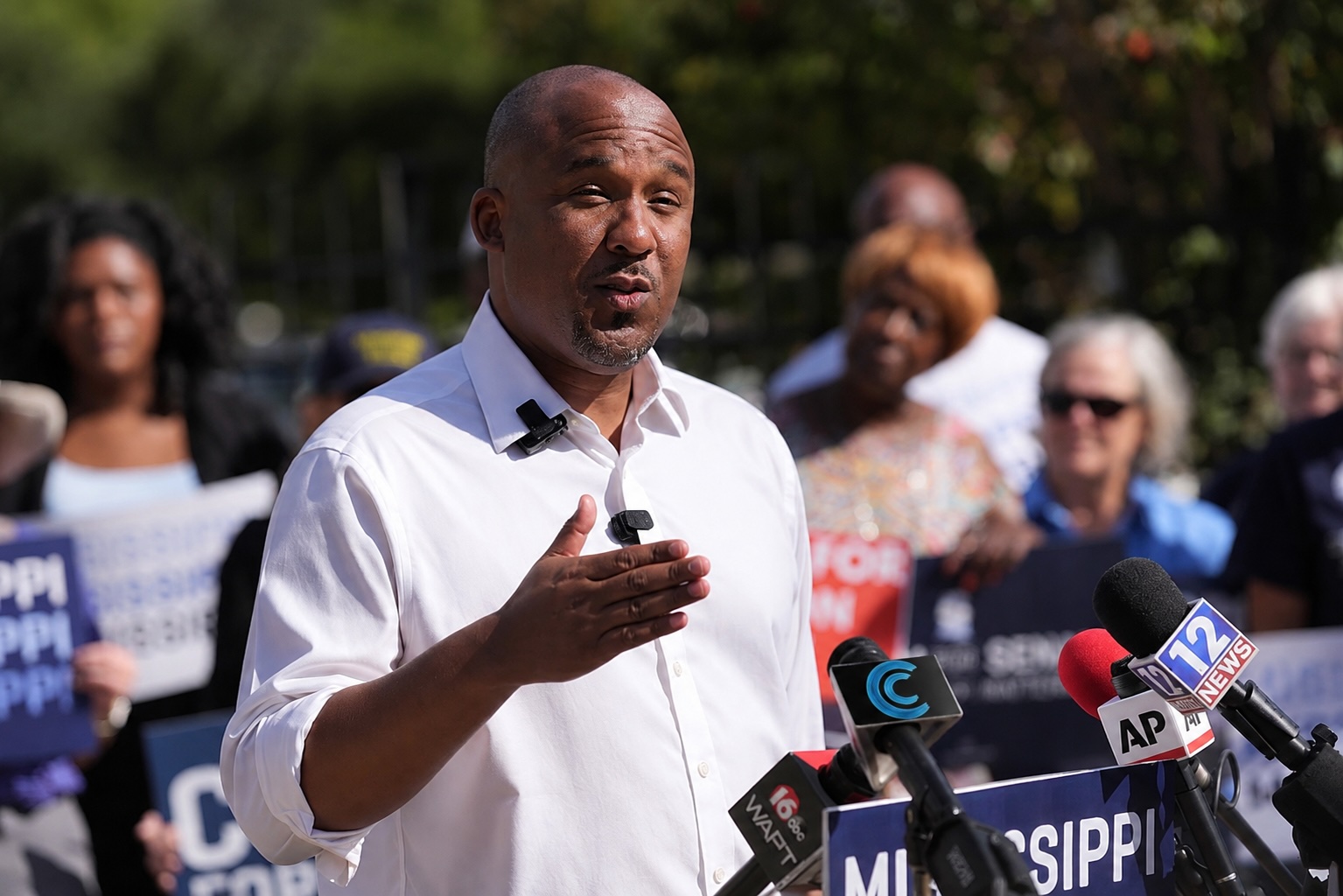
Scott Colom’s Historic Win: Mississippi Confronts 145 Years of Voting History
For the first time since Reconstruction, Mississippi has elected a Black U.S. senator—a milestone carrying extraordinary significance in a state once synonymous with the suppression of African American voting rights.
By Craig Phillips | Carolina Current
November 11, 2026
JACKSON, Miss. — More than a century and four decades after Mississippi’s last Black U.S. senator left office, voters have made history again.
Scott Colom, a 43-year-old district attorney, has defeated incumbent U.S. Senator Cindy Hyde-Smith in one of the closest Senate elections of 2026.
The Associated Press called the race Wednesday, November 11, following an extended count of absentee and provisional ballots. The results await official certification.
Colom, a Democrat, becomes the first Black person elected to the U.S. Senate from Mississippi since Reconstruction.
But the historical significance extends far beyond party politics.
In a state where African Americans were once systematically prevented from voting, threatened for attempting to register, and sometimes murdered for demanding equal political representation, Colom’s election marks an extraordinary chapter in Mississippi’s history.
A History That Began With Promise
Mississippi was actually among the first states to send African Americans to the United States Senate.
In 1870, Hiram Rhodes Revels became the first Black U.S. senator in American history.
Five years later, Blanche K. Bruce became the first African American elected to serve a full Senate term. Bruce remained in office until 1881.
Both men served during Reconstruction, the period following the Civil War when formerly enslaved Americans gained citizenship and constitutional voting protections.
But neither senator was chosen through a statewide popular vote. At the time, state legislatures selected U.S. senators.
Colom’s election is therefore unprecedented in Mississippi: He is the first Black senator chosen directly by the state’s voters.
When the Right to Vote Became a Battleground
The political progress of Reconstruction did not last.
In 1890, Mississippi adopted a state constitution designed to restrict African American political participation.
Poll taxes, literacy tests, and other voting requirements effectively stripped thousands of Black citizens of their voting rights.
The restrictions became a model for disenfranchisement throughout the South.
For generations, African Americans in Mississippi faced legal obstacles, intimidation, economic retaliation, and violence for attempting to exercise a constitutional right.
The struggle became a defining chapter of the American civil rights movement.
In 1963, civil rights leader Medgar Evers was assassinated outside his Jackson home.
The following year, Mississippi became the center of Freedom Summer, a massive campaign to register Black voters and challenge racial exclusion from the political process.
Three civil rights workers—James Chaney, Andrew Goodman, and Michael Schwerner—were murdered in Mississippi in June 1964.
Activists such as Fannie Lou Hamer continued organizing despite threats and violence, helping bring national attention to the denial of voting rights in the state.
The Voting Rights Act of 1965 became a landmark federal response to decades of racial discrimination at the ballot box.
A Different Mississippi, a Historic Election
Six decades after that legislation, Mississippi’s electorate has delivered a result that would have seemed almost unimaginable during the height of the civil rights struggle.
Colom’s victory followed a campaign focused heavily on the cost of living, healthcare, economic concerns, and representation for communities across the state.
He attracted overwhelming support from Black voters while also winning support from other parts of Mississippi’s electorate.
The result was exceptionally close. As the Associated Press called the race, Colom’s margin was fewer than 5,000 votes.
Mississippi’s political landscape has changed considerably since Reconstruction, but the state continues to confront questions about race, opportunity, political representation, and equal access to the ballot.
Colom’s election does not resolve those issues, nor does it erase the history that preceded it.
What it does establish is a new historical milestone.
More Than an Election Result
Political victories are temporary. Senators serve terms, governments change, and political majorities come and go.
But some elections become part of a much larger historical record.
In Mississippi, the distance between 1881 and 2026 encompasses the collapse of Reconstruction, Jim Crow segregation, the organized disenfranchisement of Black citizens, the civil rights movement, and generations of Americans who fought for the right to participate in democracy.
Today, Mississippi has elected a Black United States senator through the votes of its citizens for the first time in its history.
Regardless of political affiliation, that is a distinction worth recognizing.
And it is a reminder that the history of American democracy is not simply about who wins an election.
It is also about who has been allowed to participate.
Carolina Current | Independent reporting and perspectives from across the Carolinas and beyond.
Stay Current.